The emergence of Multi-Drugs Resistant Bacteria is becoming a global emergency. The ability of bacteria to reduce their susceptibility to antimicrobial drugs importantly compromises the treatment of infectious diseases. Exposure to antibiotics induces the expression of mutagenic bacterial stress–response pathways, most importantly the SOS response.
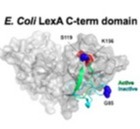
The aim of our study is to develop new suppressors of the SOS-machinery, through inhibition of LexA dissociation from DNA binding box, occurring upon autoproteolytic digestion of LexA, triggered by RecA recombinase. Both autoproteolysis inhibition and interference with RecA/LexA interaction could be explored [1, 2]. For our purposes, we will combine multiple approaches to obtain lead molecules active against SOS-response. Both in silico screenings and in vitro combinatorial methods, to generate and screen macrocycle libraries, are currently applied to our targets. Furthermore, the emerging powerful tool of camelids derived nanobodies has been explored with promising results. The capability of most promising leads (either synthetic compounds or nanobodies) to synergize with antibiotic treatments and keep SOS response repressed will be investigated in bacterial cultures models and by biochemical assays. The achievement of our goals will provide important clues in the development of novel strategies to suppress SOS pathway, rehabilitating in therapy dismissed antibiotics.
In past few decades need for a greener chemistry, devoid of pollutants and byproducts derived from industrial chemical catalysis, boosted research in biocatalysis. Enzymes, used as biocatalysts, are able to provide more accurate and specific, as well as safer and cheaper reactions.In this field, we combine in silico and wet lab approaches to rational design and directed evolution to obtain biocatalysts able to withstand industrial reaction conditions. An example of such work was performed with a formiate dehydrogenase (FDH), enzyme useful to regenerate cofactors in reactions were NADH or the most expensive NADPH are needed.
We achieved developing one of the best available FDHs capable of recycling NADPH [1], by rational engineering of a newly identified enzyme, that changed its cofactor specificity. We also study polyextremophilic enzymes that can provide lessons to adapt to harsh reaction conditions. In particular, we characterized two ene-reductases from photosynthetic extremophiles [2] and an archaeal halophilic and alkalophilic Baeyer-Villiger Monooxigenase (HtBVMO); surface electrostatics combined with Normal Modes Analysis provided phylogeny-independent predictive tools about possible enzyme solubility in biocatalysis [3].
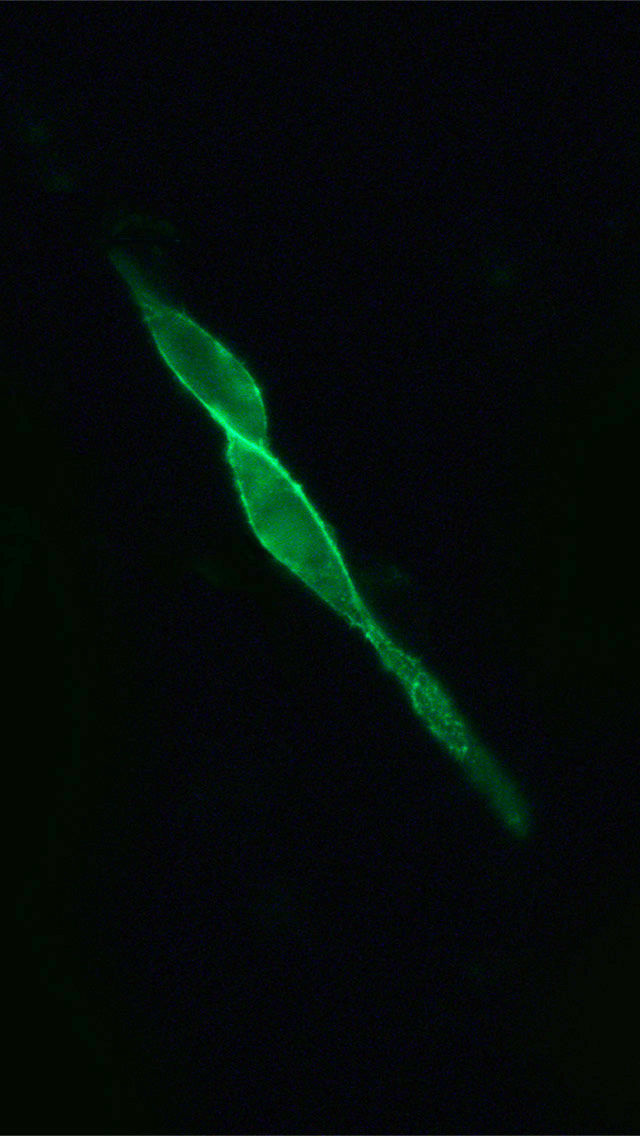
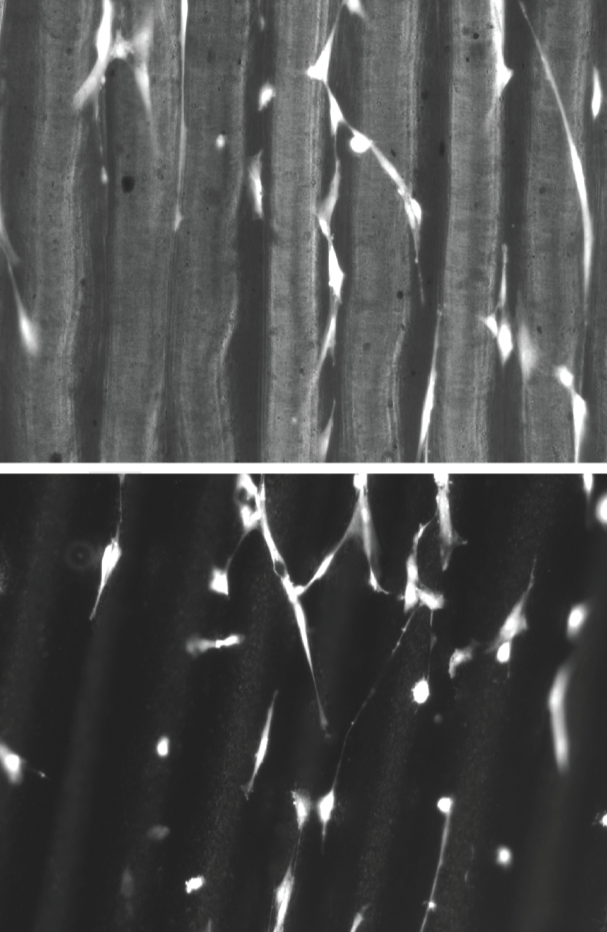
Next generation regenerative medicine systems are expected to well mimic 3D shaping, nanotopographical stimuli and biochemical cues from the specific tissue microenvironment. Biomimetic nanomaterials combine nanocomposite scaffolds (in which varying combinations of matrix components and nanofillers can finely tune multiple stimuli) and biochemical cues derived from tissue identity signals e.g. cell adhesion molecules (CAM) and extracellular matrix proteins. We set up a neural regenerative medicine system based on flat or electrospun carbon nanotubes (CNTs) and poly-L-lactic acid (PLLA) nanocomposite scaffolds, and biomimetic peptides derived from neuronal CAMs [1, 2]. Then, autologous stem cells (hCMCs) were used for better studying the influence of scaffold nanotopography and conductivity on cell fate and early differentiation [3].
More recently, we further tuned scaffolds features by varying nanofiller type (CNTs, carbon nanohorns or CNH, and graphene) and concentration. Once cytocompatibility was assessed [4], we compared their ability to commit hCMCs towards multiple cell lineages and found that fine nanofiller variation can shift committment towards either neural or myogenic lineage [5]. Since tissues 3D structure is not properly reproduced by traditional 2D cell cultures, we also recently introduced 3D printing to generate 3D scaffolds.
Bioremediation is defined as the exploitation of living organisms or their enzymes to reduce environmental pollution. Per- and poly-fluoroalkyl substances (PFAS) have been chosen as the first target of our bioremediation project. We aim to characterize enzymes, pathways and organisms able to degrade PFAS, even partially or reaching complete mineralization. We are currently assessing the feasibility of PFAS defluorination by dehalogenases, which seems to be a fundamental reaction in PFAS degradation.
We wish to improve activity and stability of the enzyme by both computationally driven rational design and directed evolution. This implies heterologous protein expression and biochemical characterization. Mass spectrometry and other methods are exploited for enzymatic activity validation. We are also investigating Synechocystis cultivation in PFAS-containig water. Preliminary experiments show that the cyanobacterium is a good candidate to be applied in bioremediation processes.
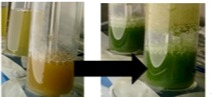
In recent times, the potential of cyanobacteria as biotechnological cell factories has been boosted by the increasing knowledge on their metabolic processes and the development of tools for their genetic manipulation. These micro-organisms are more sustainable than heterotrophic bacteria and yeasts; indeed, they only need water, light and some micronutrients for growing and sequestering carbon dioxide from the atmosphere to synthesize the product of interest.
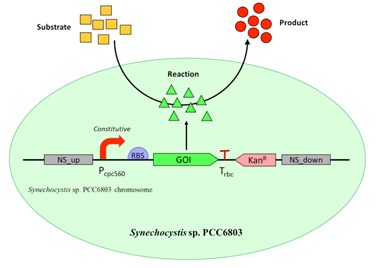
We are using Synechocystis sp. 6803 as cyanobacterial model to be engineered as a cell factory. To this aim, we have recently produced a new vector that permits integration via homologous recombination into a neutral site of the Synechocystis genome. It has been proved useful to over-express two heterologous enzymes: a Baeyer−Villiger Monooxygenase (CmBVMO) and an ene-reductase (CtOYE, old-yellow-enzyme). The two transgenic Synechocystis strains obtained are going to be tested in whole-cell biocatalytic reactions.
3D printing is a cost-effective, reliable and versatile tool to manufacture products for any application, from industrial design to regenerative medicine.Each different printing technologies has its own peculiarity. Fused deposition manufacturing (FDM) allows the deposition of layers of a fused filament on top of each other to make a solid object. Stereolithograpy (SLA) and digital light processing (DLP) use UV-light to polymerize a photoactivable resin. Finally, bioprinting is capable of printing cells dispersed in soft materials.While bioprinting compatibility with organisms is well established, FDM, SLA and DLP’s depends on the substrate printed and research focuses on producing biocompatible filaments and resins.
We have recently equipped our lab with such printing technologies, with the aim of producing reliable substrates for cell growth and differentiation. Taking advantage of our expertise with nanomaterials, we are using FDM and biocompatible filaments to develop 3D-printed scaffolds for regenerative medicine.The standardised quality of commercial filaments and the reproducibility of 3D-printed parts allow for the production of higher quality scaffolds with reduced batch variation, making their effects easier to study.In addition to using FDM in scaffold production, we are working on customised resins for DLP and SLA and on printable hydrogels which better mimic in vivo conditions.
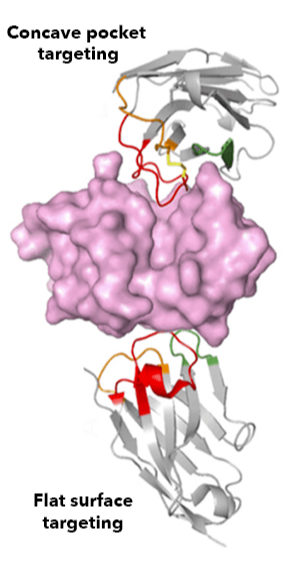
Powerful tools in interactomics are nanobodies, single domain antibodies from camelids or sharks with a MW roughly 10% of a whole antibody, while showing comparable specificity. Bulk production of nanobodies can be performed both in bacterial and yeast cells; then they can be easily isolated via phage/yeast/bacteria panning methods. It is possible to perform in vitro maturation of nanobodies to evolve or adapt them to new/modified targets, or even screen synthetic libraries of nbs to aim at toxic antigens incompatibles with animal immunization.
We exploit nanobody complexes to establish conformational uniformity to samples, a fundamental feature to protein structure determination by X-ray crystallography or cryo-EM, thanks to the ability of nanobodies to stiffen flexible regions and mask surfaces prone to aggregation. Finally, we use nanobodies to target extremely challenging pathways, aiming to hardly druggable proteins, both in cancer and infection diseases (Maso L. et al., in preparation).
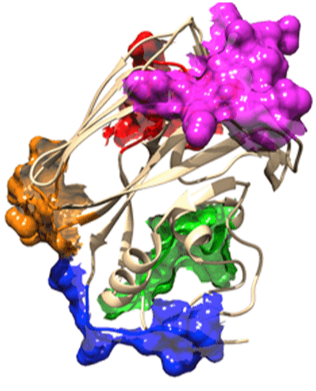
We developed the first software for Reverse Vaccinology: NERVE [1, 2] . In recent years, we focused on the in silico definition of functional fingerprints in virus immunoinformatics. Even though the overall protein fold, i.e. including core secondary structure elements, is crucial to molecular function, surface patches are more relevant to modulation of interactions with molecular partners.
Recently, we demonstrated that molecular fingerprints on protein surface features may sort proteins based on "functional" classification. In particular, comparative surface electrostatics analysis unveiled novel fingerprints in the evolution of influenza viruses and suggested mechanisms underlying host jump in pandemic events [3, 4]. Further analyses allowed us to identify molecular trends in pathogenicity shift [5].
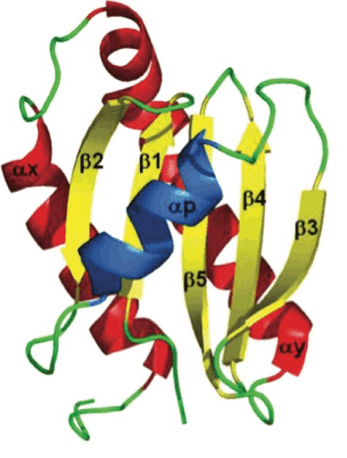
We combine structural bioinformatics and wet lab structural biology for protein characterization and engineering. We are experienced in the computational discovery of novel protein domains (e.g the Longin Domain) [1, 2], functional motifs [3, 4] and gene/protein families [5, 6]. Discovery of functional motifs/domains and/or gene/protein families often prompted us to perform further experimental characterization [7, 8, 9, 10]. In addition to driving characterization, we also took advantage of in silico analyses for the smart engineering of genes and expressed proteins (e.g., by modifying the ion selectivity for Channelrhodopsin-2, as in 11; for other examples see biocatalysis page in this website).
In protein characterization and engineering projects, we can take advantage of expertise in protein expression, purification and structural biology analysis by high resolution X-ray crystallography.For instance, based on bioinformatic predictions, we focused on protein crystal structure of a microbial allantoin racemase and this allowed us to reveal the origin and conservation of a catalytic mechanism [12]. Structure-based virtual screenings prompted the discovery of antimicrobial inhibitors of a novel β-lactamase [13] and of GES-5 carbapenemase [14, 15]. X-ray crystallography was crucial as well in deciphering the activity of broad-spectrum β-lactamase inhibitors [16] and important structural aspects of Helicobacter pylori antibiotic resistance [17].
Designed with Mobirise